
Where was I?
Autumnal Equinox 秋分, Cold Dew 寒露, Frost Descent 霜降

I should accept the fact that I’m not a summer person. I don’t like the sun - 太晒 - and the summer harvests don’t excite me. There’s fruit - wineberries, juneberries - but they’re limited for someone who doesn’t really bake or cocktail. The leafy greens - lambsquarters, amaranth - are nice in the way that spinach is nice, and spinach-nice is not enough to outweigh the risk of dog pee. The summer mushrooms - chanterelles, black trumpets - are always an enticement, and maybe someday I’ll be able to focus my energies on them when rainfall is the only rhythm I have to answer to.
This summer was also a weird one: Xerxes died in July, and I got married in September. Between those two events, I malaised, grief compounded by the neverending feeling that there was always something else I had to plan, some new reason/excuse to not go outside and literally touch grass. I’m also willing to admit that I just didn’t want to be covered in bug bites (an inevitability by every other September of my entire life) on my wedding day. So I didn’t forage at all, and not foraging meant not cooking, and not cooking meant not really eating. I did develop a raging addiction to BonBon candy, and it was not a great sign that the only other people ever in the store were packs of teen girls.
Don’t worry, I’m not depressed. The wedding was awesome, and everything was different once we arrived back home into the full flush of fall. I had basically spent a whole year planning one huge dinner party, and all my creative cognition - normally devoted to a complete ecosystem of activities comprising foraging, cooking, hosting friends, and writing - had to be focused on that. And all of a sudden I was free to think about everything else again!
Autumnal Equinox 秋分
The first ginkgos were dropping when we got home:


Normally, I turn to the Chinese internet to research Chinese ingredients, but most Chinese people seem to encounter ginkgo nuts in their processed, precooked, pallid form: shrink wrapped in the frozen aisle.1 These supermarket ginkgo are an anemic opaque yellow color, chalky and bitter, and people don’t do much with them besides adding them medicinally to soups. Fresh ginkgos - the color of grade A jade and pleasantly gummy - are more known in Japanese cuisine. In New York, we are lucky to have fresh ginkgo thanks to city planning mistakes that have resulted in very prolific female trees dotting the sidewalks, and the Chinese aunties here certainly know about them. I try to stay out of their way - my trees are in a very white neighborhood.
Gingko cooking tip: once the nut has been removed from the fruit (squeeze them out in the sink into a colander and flush all the fruit pulp straight down the disposal if you have one), rinse them off and pat them dry with a towel. Put 1/3 of a cup of nuts into a paper bag and drizzle with olive oil and sprinkle with salt. Fold the bag closed and microwave for 60-90 seconds, or until you hear a few of nuts explode. This, I’ve found, is the quickest way to cook them and get their shells cracking at the same time. If you don’t want to deal with the stink, the mess, and the potential skin rashes, the aunties sell their stashes on Grand St between Bowery and Elizabeth.
The equinox also means pawpaw season. Trees grow in the city, but the trees I know are all cultivated trees, not feral, so it does not feel fair to forage freely from them. I’d rather buy (huge, excellent) pawpaws from Nature Based NY, who sources them from farmers in Pennsylvania for one fleeting weekend (you gotta follow the IG for the drop). Everyone says pawpaws have never been commercialized because they’re super perishable, but I don’t think that’s true. When they go “bad,” they go bad like a banana, and I’m a girl who likes a black banana. Last week - last week! - we ate the last of this year’s pawpaw haul, which had been sitting in the fridge for almost two months.
Early on, though, I made round after round of pawpaw glazed rotisserie quail. In the 24-hour marinade: pawpaw pulp, shallots, ginger, lemongrass, dark soy, brown sugar, five spice powder, and splashes of last year’s pawpaw vinegar. For my Mid-Autumn Festival party, I did the same marinade on chicken wing skewers threaded with roast ginkgo. I would have slapped these on the grill but it was raining. Next year, I will also commit to making guests gnaw on quail - you need that gaminess for such an aromatic marinade. Serve with a wedge of lime and a little chili pickle.


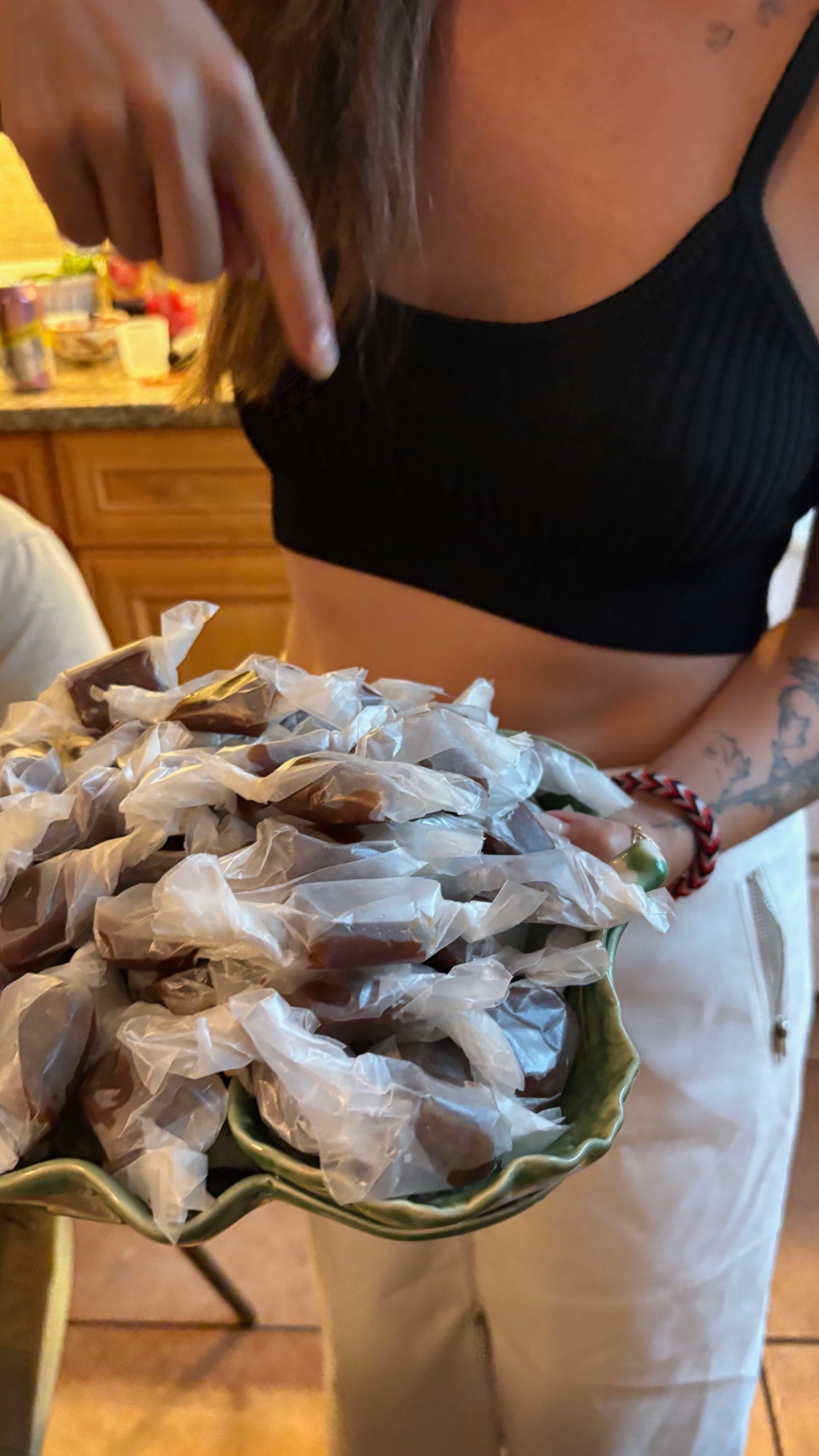
This year I also perfected my apple cider and mugolio caramels, which is basically just Smitten Kitchen’s nearly perfect recipe with pine cone “honey2” swirled through it right at the end. They’re a very adult candy - the superreduced apple cider and mugolio both have a hint of bitterness, and I LOVE them together. I make these caramels every year to give out as fall party favors or host gifts, and this year I ignored the thermometer and just diligently dribbled caramel into cold water until it was properly hard-ball. This paid off, because I like a chewier caramel, but it was also 10x more annoying to portion out. But that’s what I now have a husband for.
Cold Dew 寒露
More riffs on ginkgo and pawpaw, more cribbing of other people’s ideas. I went out to see Tama and brought her a French apple gateau. This ATK recipe is goated. It is written for non-bakers who don’t like anything too sweet, so of course it was the perfect gift for an Asian auntie from an aspiring one. It’s basically messy slices of apple loosely shellacked together with pancake batter. The thing that takes the longest time is peeling and mandolining the apples, and you can do that while watching Bon Appetit Your Majesty.3 The only thing I changed in this recipe was omitting vanilla and adding the pulp of one large pawpaw and some grated ginger to the batter. So fragrant. If you make this, the whipped cream is a MUST.


In Tama’s meadow wonderland I harvested fennel sprigs (mostly seed, some flower), seedy perilla, a bucket of freshly fallen black walnuts, and more apples.
I also made a million riffs on the best dish at Cheli, the braised bolete (porcini) rice. Fall just makes me want to eat crispy bottomed rice cooked in earthenware. Last year it was all about the bo zai fan when I got back from China, this year I had really lovely peppers from Choy Division throughout fall, so I set about trying to recreate the Cheli dish, which is so savory and cozy but not dead asleep thanks to the most graceful touch of longhorn pepper. I made this dish with white rice, with wild rice, with dried morels, with dried “osmanthus mushrooms” from Yunnan, with dried black trumpets, with kabocha squash mixed in, with kombu stock, with dashi…
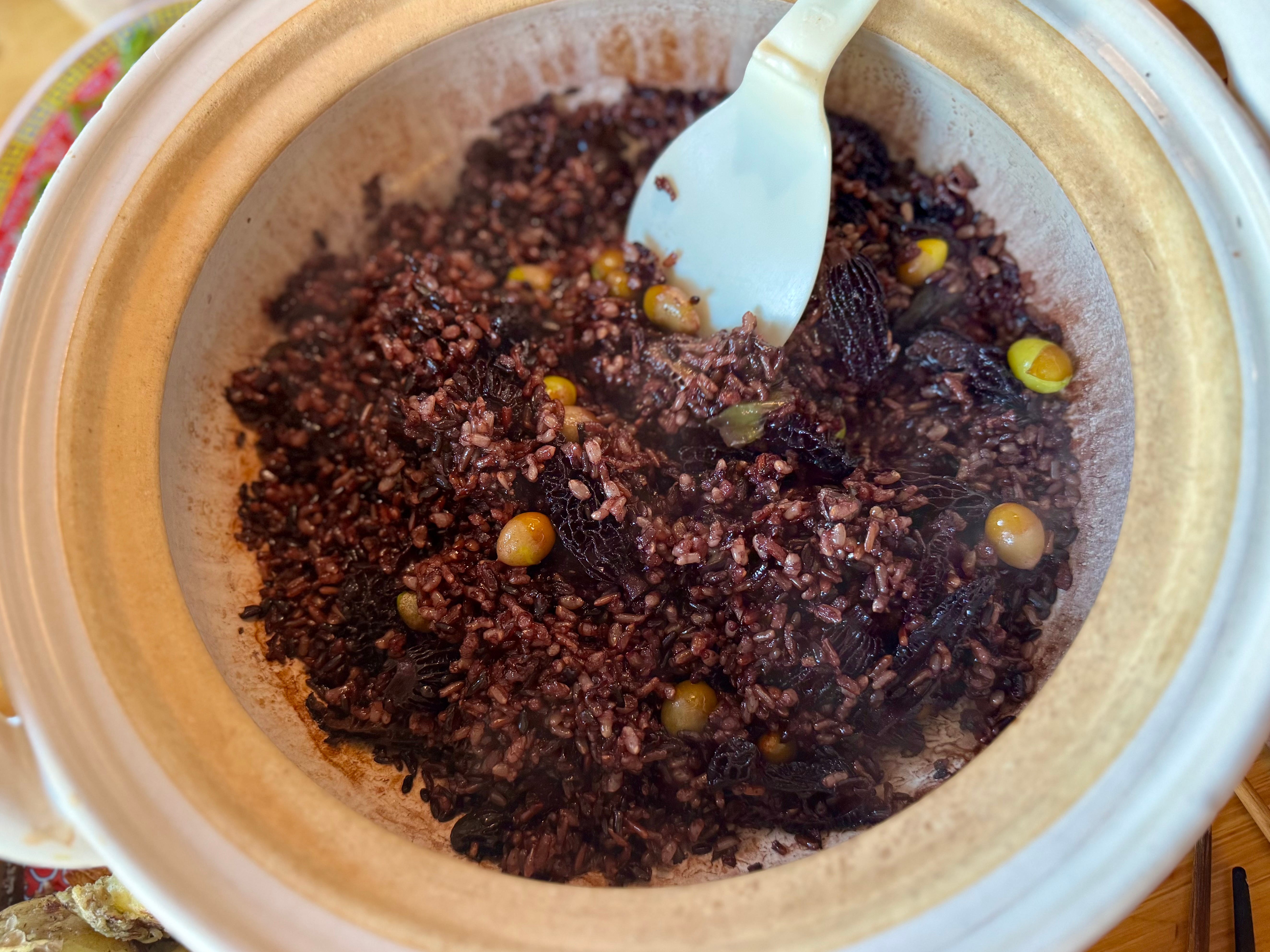
Here’s the formula: rice, any kind. Fresh or rehydrated mushrooms, any kind (but fancy ones are worth it). Stock, any kind (mushroom soaking water will do). Slivered mild green chile pepper, such as longhorn or cubanelle or even shishitos. A mix of light and dark soy sauce (at least 2 tablespoons for a cup of rice). DUCK FAT. Throw it all into an earthenware pot, the duck fat generously globbed on top, and cook until rice is toasted on the bottom. Add roasted ginkgo nuts at the end and mix it all together.
Frost Descent 霜降
We had such a mild fall but there’s always one week in New York when you go from A/C humming to one day later wondering if it’s too early to crank the heat and lug out the humidifier. I think by the original Chinese solar terms, this transition happens during Cold Dew, but this year in NYC, it happened during Frost Descent. (What didn’t happen during Frost Descent was the first frost, which has only just now happened in Start of Winter).
Anyways, the second the air turned dry, I knew I had to do two things: get my baby toon plant - a wedding gift from Tama - into the ground before the first frost, and wind cure duck legs.


Yes, years of foraging feral toon and now I have my very own sproutling to tend to. Of course, I still live in a Brooklyn apartment, so this became an exercise in guerilla gardening, which I guess I’m long overdue for. My precious is planted in a public park near my apartment, camouflaged amongst tree of heaven (lol). I snuck out at dawn to plant it, mostly because I actually live in a very Chinese neighborhood so I don’t want anyone else clocking this baby. The ground was still loose and soft.
This is also the seasonal point for processing black walnuts, which by now had started turning black. You want to gather them green, when the husks have not yet rotted away so the squirrels can’t get to them. After I collected them at Tama’s, they sat in their bucket for a week, slowly turning black. You want them a little black, because black means soft and easy to husk. However, what makes them turn black are walnut fly larva, which eat the husks from the inside, so when you open a husk, it’s crawling with tiny maggots. This is not bad for the nut itself, which is still protected by its shell, but it is still a conundrum for me, a person who doesn’t like being eye to eye with maggots.
I thought I’d be clever and stomp them (like grape stomping but way messier) on my roof, where tons of birds hang out. I thought this way I wouldn’t have to touch maggots and the birds would get some protein. So I stomped my walnuts and the husks came off and then I got the birds’ attention by scattering some seed amongst the husks. An hour later I had a roof crawling with tiny maggots and a flock of fat and happy mourning doves who had contently picked out every speck of birdseed from between the maggots.4 Turns out mourning doves are vegetarian. Turns out European starlings, which are omnivorous and also normally hang out on my roof, are largely migratory at our latitude. So now I know that Frost Descent is when the starlings will have abandoned me to my wormy walnuts. The conundrum continues.


This is my first time processing black walnut meat. If I get a decent yield after all this work, what should I do with such treasure? I’m thinking Georgian walnut sauce, or maybe a 五仁 mooncake…
I’ll discuss wind curing duck legs in depth next time since they’re still hanging now, but I recommend you order now if you have any interest in following along (soon, it’ll be too cold). I cure 20-30 legs per year from Joe Jurgielewicz & Sons, purveyors of the best, cleanest duck. After curing, I use the legs all winter in soups, or steamed and served with rice (like 腊肉 or Chinese sausage), or steamed and then stir-fried in all kinds of dishes. They also make great gifts for bold cooks.
When I buy the legs, I always order tongues too, since Jurgielewicz has BY FAR the best price for duck tongue. This year, I also got liver and made duck liver pate. The base unit for liver is two pounds, so, um, I now have nine jars of pate. I used Hank Shaw’s recipe, and here are my twists: a solid glug of black walnut syrup in a nod to the season. You can use store bought black walnut liqueur or maple syrup if you don’t have homemade. You won’t really taste it but it sands down the iron notes of the liver very nicely. And then, because I will serve some at Thanksgiving, I topped my pate with cranberry jelly and zested orange.


The cranberry jelly is just back-of-the-package cranberry sauce with some OJ added to keep it loose. I also sieved while hot to remove the pulp. Order of operations: make the pate and portion into the jars, stick it into the fridge to cool completely and harden up for a few hours. Make the cranberry jelly and while still warm, pour onto the cold pate so you get a nice flat layer that’s separated from the stuff underneath. These also make great host gifts (lol I keep saying this but I am not getting invited to that many house parties. Invite me to your house party so I can bring you pate and cider caramels and cured duck legs!!) They also keep for a long time in the freezer.
Whew, there’s fall sorted. Winter next. Drop a line if you buy duck legs, we’re in this together.
Even my mom had never had fresh ginkgo until she had them with me
Gather tender young resinous pine cones in May or June, put them in a jar and cover with sugar. Wait.
Please someone tell me you’ve seen this deranged show too
I often say to Johnny now that we’re married, “no backsies!!!”