
Wind Cured Duck
Start of Winter 立冬, Minor Snow 小雪

I started curing duck legs in 2020, at the height of COVID spring. It’s weird to say, but that period of time was strangely inspiring and productive for me. My day job (in strategy and operations at a big healthcare company) went remote, and all the bullshit to it evaporated overnight, leaving only two very practical mandates: keep as many medical offices open as possible, keep as many staff from getting sick as possible. As a member of the Professional Managerial Class, I don’t typically encounter clarity of moral purpose in my day jobs, and I was grateful to have it for once. I logged on early in the morning, worked intense, long days, and then logged off around the time people were banging pots and pans out their windows, exhausted and amped at the same time.
As healthcare pivoted to remote visits, food distributors pivoted to retail. In the manic evenings, I placed orders for absurd things, such as the five pounds of dried tientsin chilies from Southeast Asia Food Group that came in a bag the size of a hotel pillow. I foraged and shopped and fermented and fomented in my kitchen, and I wrote about what that was all like for Bon Appetit.
Five years later, most of the wholesale distributors have gone back to wholesale only (I’m still sad about AsianVeggies.com), but Joe Jurgielewicz & Sons is still out here slinging duck legs, 30 at a time, to my front door.1
What does one do with 30 duck legs? Short of organizing group buys (which I also did), the only answer is to cure them. I grew up in Nanjing, duck capital of the world, yet didn’t really have a relationship with cured duck. Nanjingers don’t cure and preserve much, in contrast with say, the Sichuanese with all their pickles and paocai, and the Cantonese, with their lap cheong and lap yuk. It’s temperate and fertile year-round in Nanjing, and the cuisine reflects that.2
Anyways, most of the methods for curing duck - 腊鸭 - come from Cantonese sources. If you already make 腊肉, you’ll be pleased to learn it’s pretty much the same process. I have made both, and I like having both on hand through the winter. They’re both great steamed simply and eaten with rice, or stir fried with various veggies. However, cured duck, unlike pork belly, also lends itself especially well to hearty, milky soups. I’m getting ahead - a plethora of recipe ideas will close out this post.
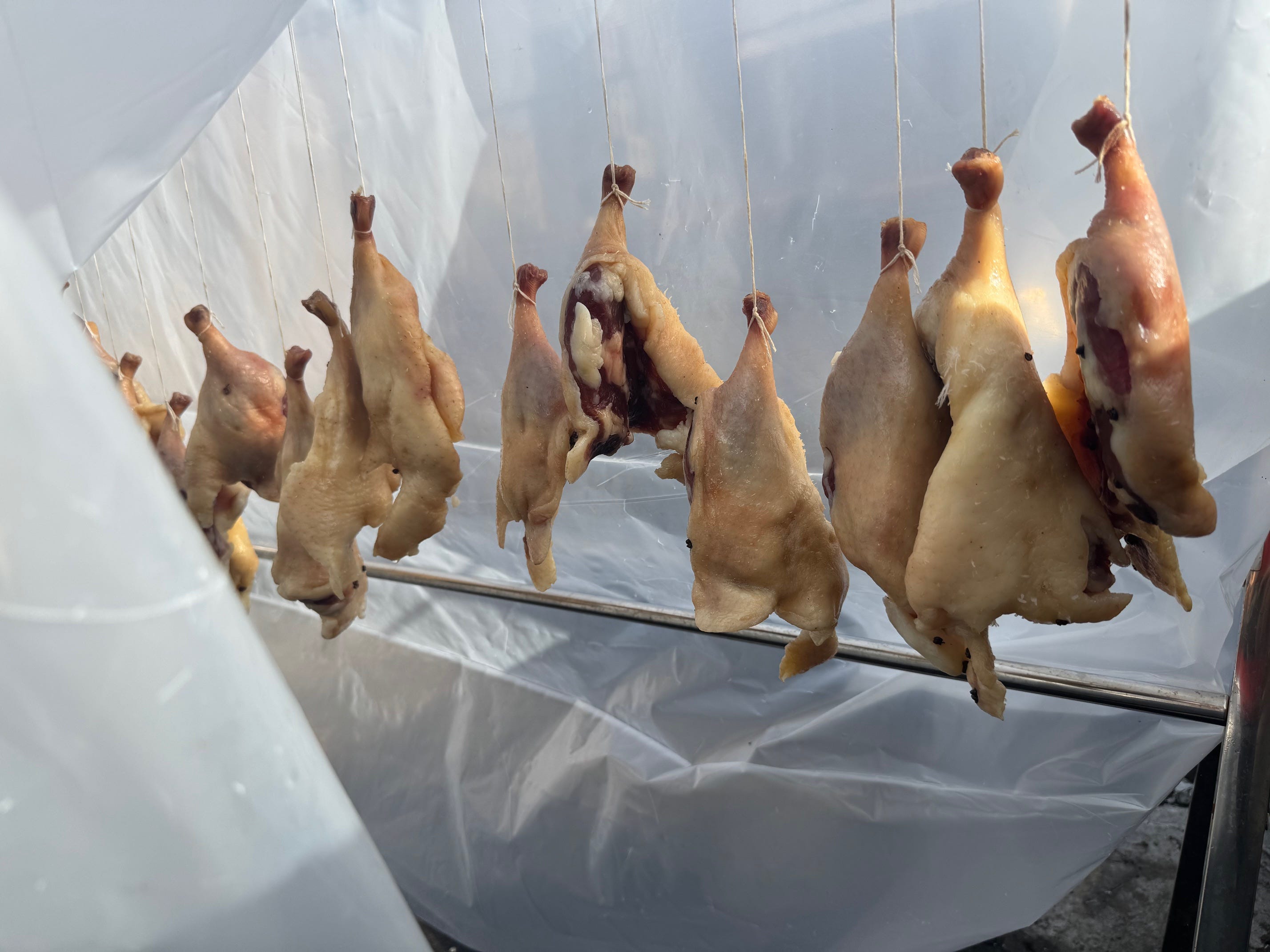
Wind Cured Duck 腊鸭
First principles:
Curing just means drying. (Hence, you cure meat, but you also cure plaster and gummy bears.) Curing meat, specifically, is probably the oldest preservation technique in the world. The point is to dry out meat enough so that it lasts weeks and months longer than it otherwise would. You achieve this with salt. Sugar, spice, and nitrates are all optional. Salt is the thing that dries out the meat. It’s a huge added benefit that salt also makes the meat tasty and edible without cooking. Wind, and cold but not freezing temperature, aid this process of drying.
We live in the refrigerated age. There is no need to wind cure things as long as our ancestors did. Traditional wind-cured meats stay hanging - typically from an eave - all winter and they are HARD.3 They take a looong time to rehydrate and make tasty again. So, we optimize for texture and flavor, not preservability. Leather rather than stone. When will you know you’re done? Envision chucking a duck leg at someone: if they take it as a light prank rather than assault, you’re good.
The Build:
If you have big dehydrator, just set that baby to 55 degrees and skip this part. Otherwise, you will need:
Something to hang the meat from so that it can get airflow on all sides:
A low hanging tree branch also works great
How about a rake propped between two chairs?
In a pinch, I’ve also used coat/hat hooks in a foyer - just make sure they’re not all up against the wall
Kitchen twine for tying around the duck legs and S hooks for hanging
Do you have a garage? Ideal. Doing this outside? Consider a protective tarp against rain and flying detritus. I tent mine over the clothes rack and weigh it down with rocks at each corner so wind can still get under. And yes, you do want it to be transparent so that the sun can help too.
If you are inside, place another tarp, or cardboard, underneath your rack to catch oil drips
If you truly can’t with all this: just use your fridge. Wrap the duck legs in parchment paper to keep them from drying too quickly, and set them on a rack. The upside is you won’t have to worry about spoilage at all, the downside is you won’t develop any of the secondary flavors that come from exposure to (good) microbes.
A final, extremely non-canon technique: the oven. The end product is less of a cure and more of a jerky/confit, but culinarily it functions the same way, and keeps just as well. My oven has a lowest temperature of 170F, and I put the legs on rack and turn the oven to 170, turn it off again, let them cool completely, and repeat until they have achieved sufficient moisture loss (3-4 cycles over 2 days).


The Timing:
Wait until the wasps are done for the season (they go crazy for meat) and the fall rains have ended, but try to do it before nighttime temperatures regularly dip below freezing. A clue: when your own lips start chapping like crazy. So, likely during Start of Winter/立冬 or Minor Snow 小雪 here in NYC. Last year, I hung my duck in late September before leaving for China and it was way too early - they were usable, but developed a strong funk, which happens when fat goes “off.”4
During the curing process, freezing will change the musculature (as it does fresh meat), which is why you don’t want to wait until deep winter. Ironic, because cured meats, “腊,” comes from “腊月,” the final month of the lunar calendar, meaning January. If curing was traditionally done during this month, I have to imagine it was only in the south.
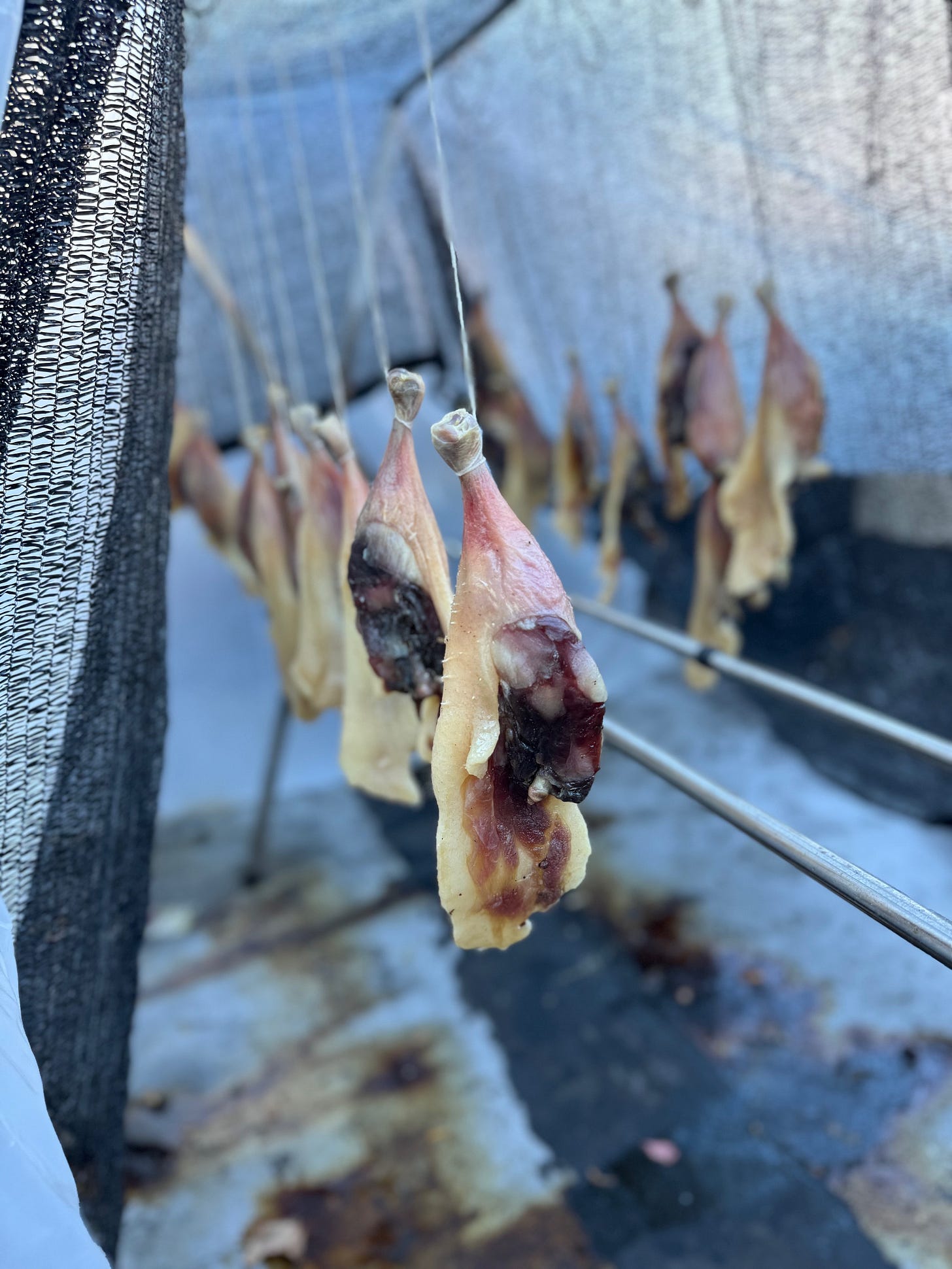
My weird batch last year that got hung too early and then rained on - notice how I was using netting instead of tarp
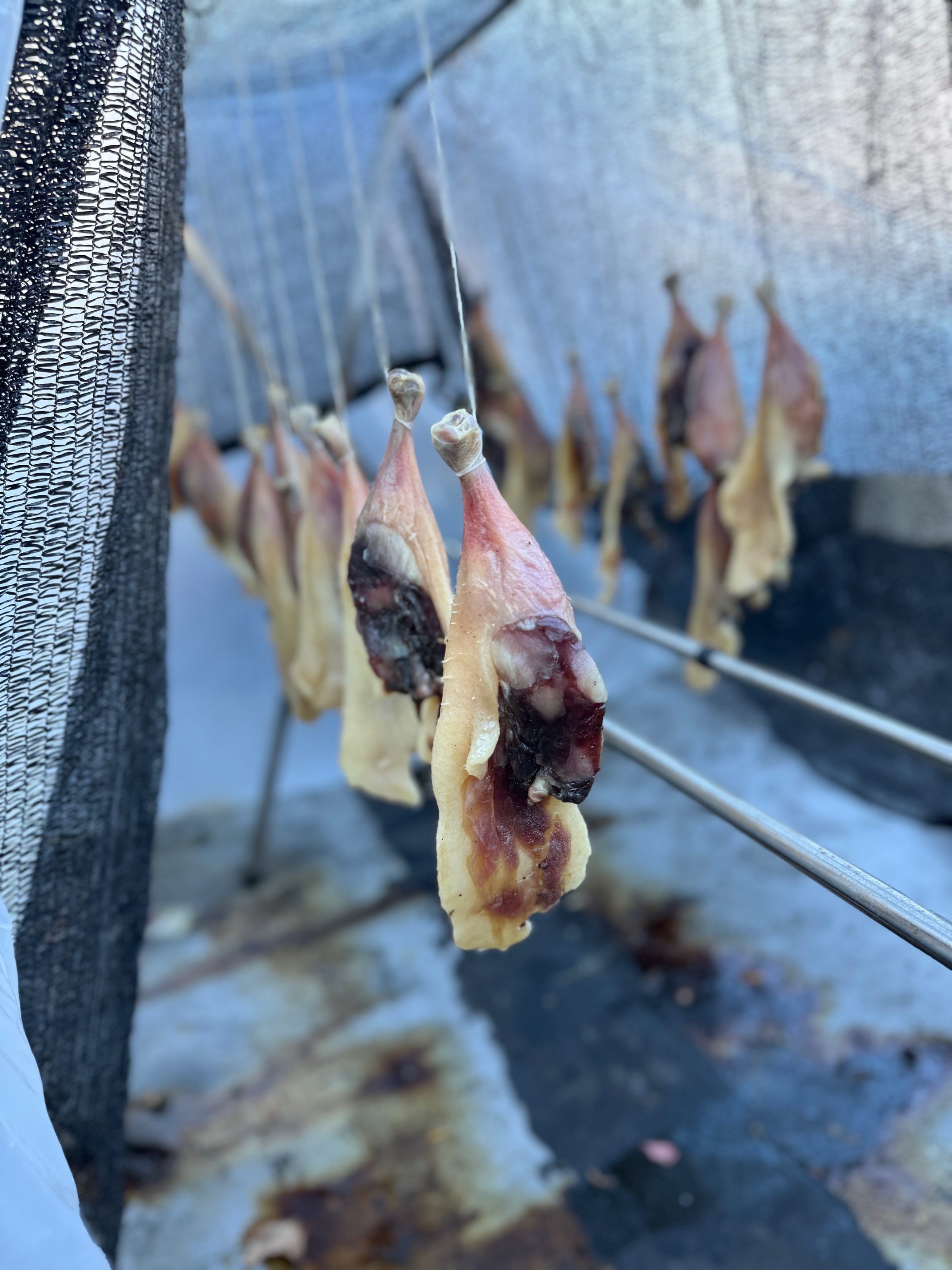
The Ingredients:
Besides (kosher) salt, you’ll also need a neutral high-proof alcohol. Baijiu is traditional, and Mei Gui Lu Jiu is basically supermarket baijiu (mine is 54% alcohol). Vodka is also perfectly acceptable.
Sichuan pepper, bay leaves, star anise, cinnamon sticks, and fennel are all optional seasonings. I use Sichuan pepper and leave it at that because I want maximum flavor versatility.


The Process:
Toast salt and other seasonings together on medium low heat until the salt takes on a yellow hue. This coaxes aroma out of the spices but also dries out any excess water in the salt. You need around 5% of the ducks’ weight in salt - I find that a cup is enough for 20 legs. After toasting, mix a couple of tablespoons of alcohol into the salt so that it becomes the texture of damp sand.
Wipe ducks dry, then spread the salt/alcohol mixture over the legs, massaging them to cover all surfaces. Spread them out in layers on a tray (I use half size aluminum steam trays that can stack in my crisper), then put them in the fridge with something heavy on top. For the next 24-48 hours, they will release liquid. Drain the liquid every 12 hours until no more liquid is seeping out.
Tie a double length of kitchen twine around each duck leg (so that the twine is looped), and hang the legs off the S hooks on your rack. Try not to crowd them.
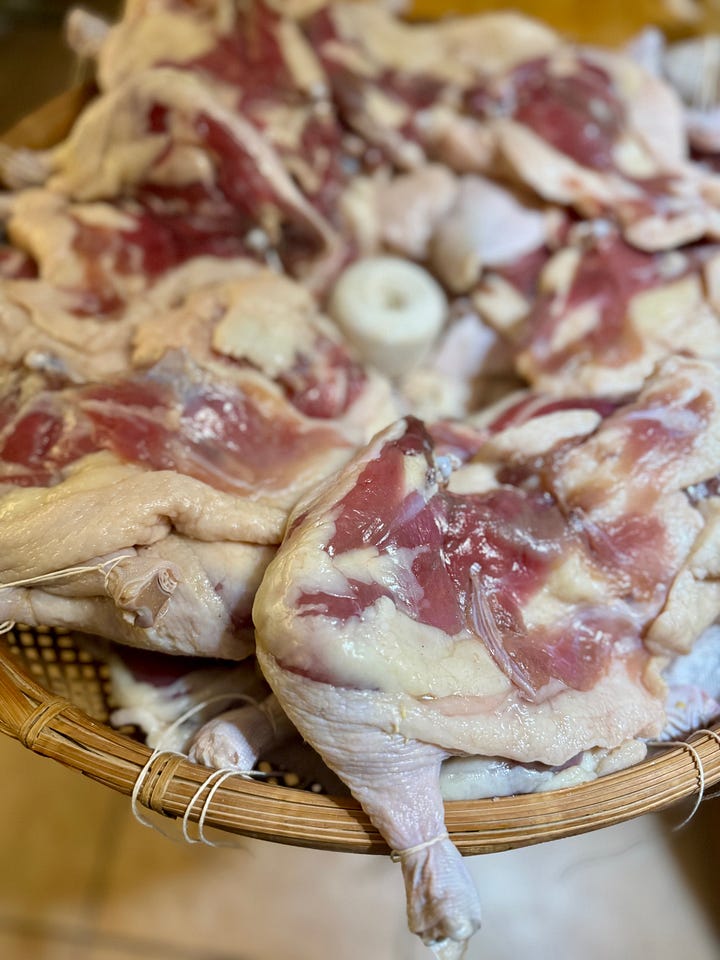
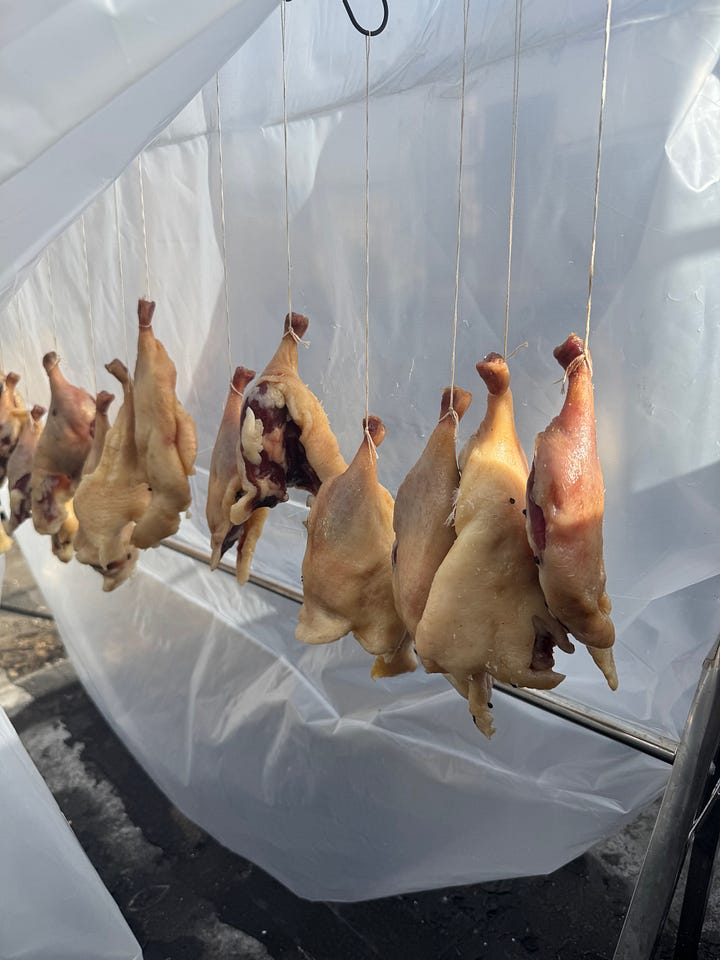
Legs post-pressing, tied with twine; hanging under tarp, day 3 The legs are ready when the fat feels waxy, the flesh has darkened, and the skin has yellowed. At this point, the legs will have lost about 30% of their weight. It can take as little as three days. Beyond that, the meat will simply continue to become dryer and harder. Once cured, the legs can store in the fridge, cellar, garage, or cold pantry easily through the winter. You can also freeze them - once they’re dry enough, freezing will not damage them. Mine go back into the crisper, layered between wax paper.


HOW TO USE CURED DUCK LEGS (THE FUN PART)
A cured duck leg is duck prosciutto in that you can shave it thin and eat it raw if it’s not too salty, but typically, Chinese people cook with cured duck.
Rice Variations:
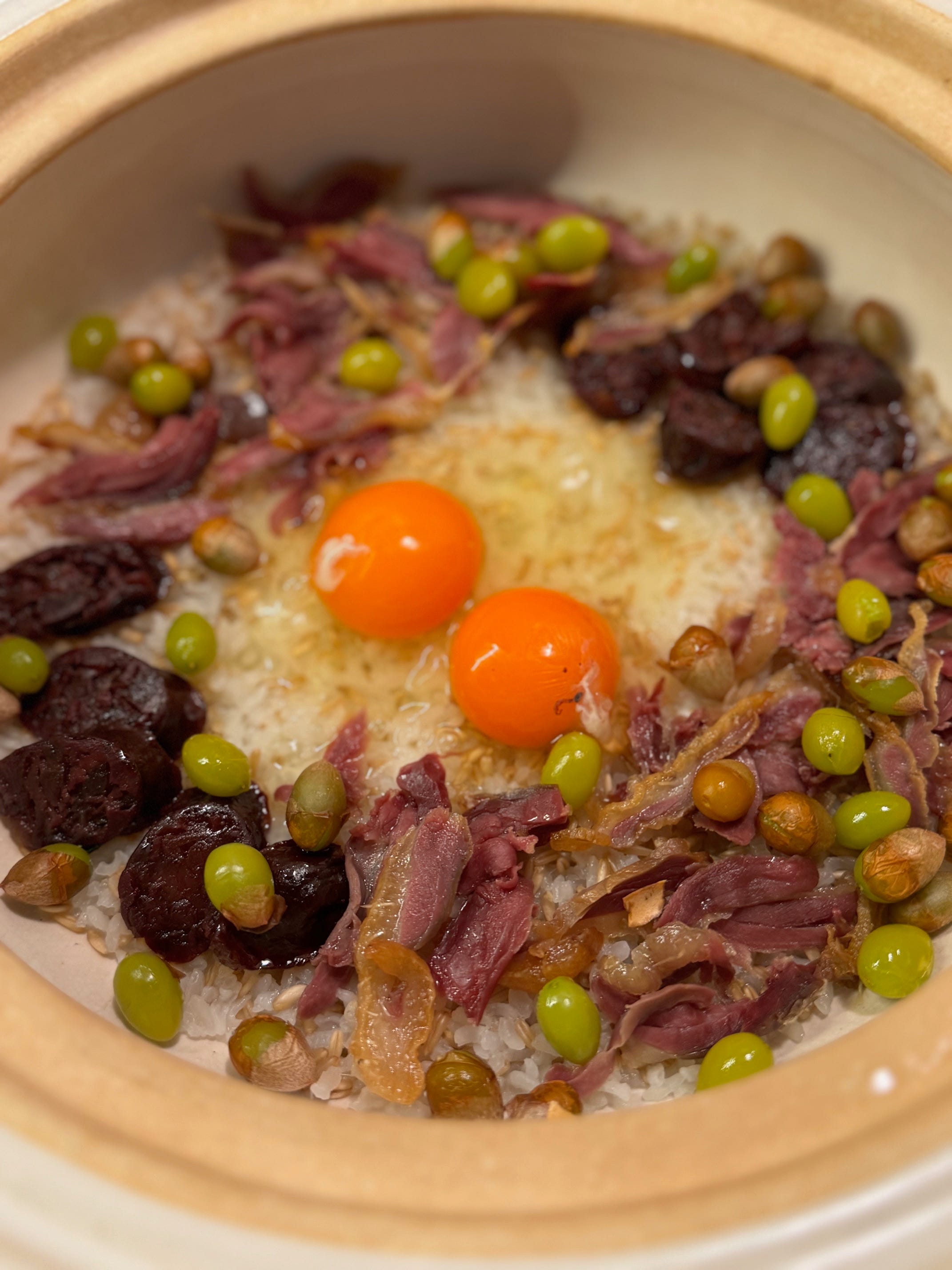
Over bo zai fan, along with your other favorite toppings. You’ll want to shred the meat off the bone, which will require softening first - you do that by a quick boil, which will also help remove excess salt and fat scum.


Two birds one stone method - if you have a pot with a steamer rack on top, you can steam the duck legs while rice cooks underneath. The duck fat drips into the rice and then you can use the softened legs for something else…


…Such as fried rice. I remove all the meat and fat from the legs, dice it up, and crisp it all up before adding it to fried rice. Of course, you want to fry the rice IN the rendered duck fat.
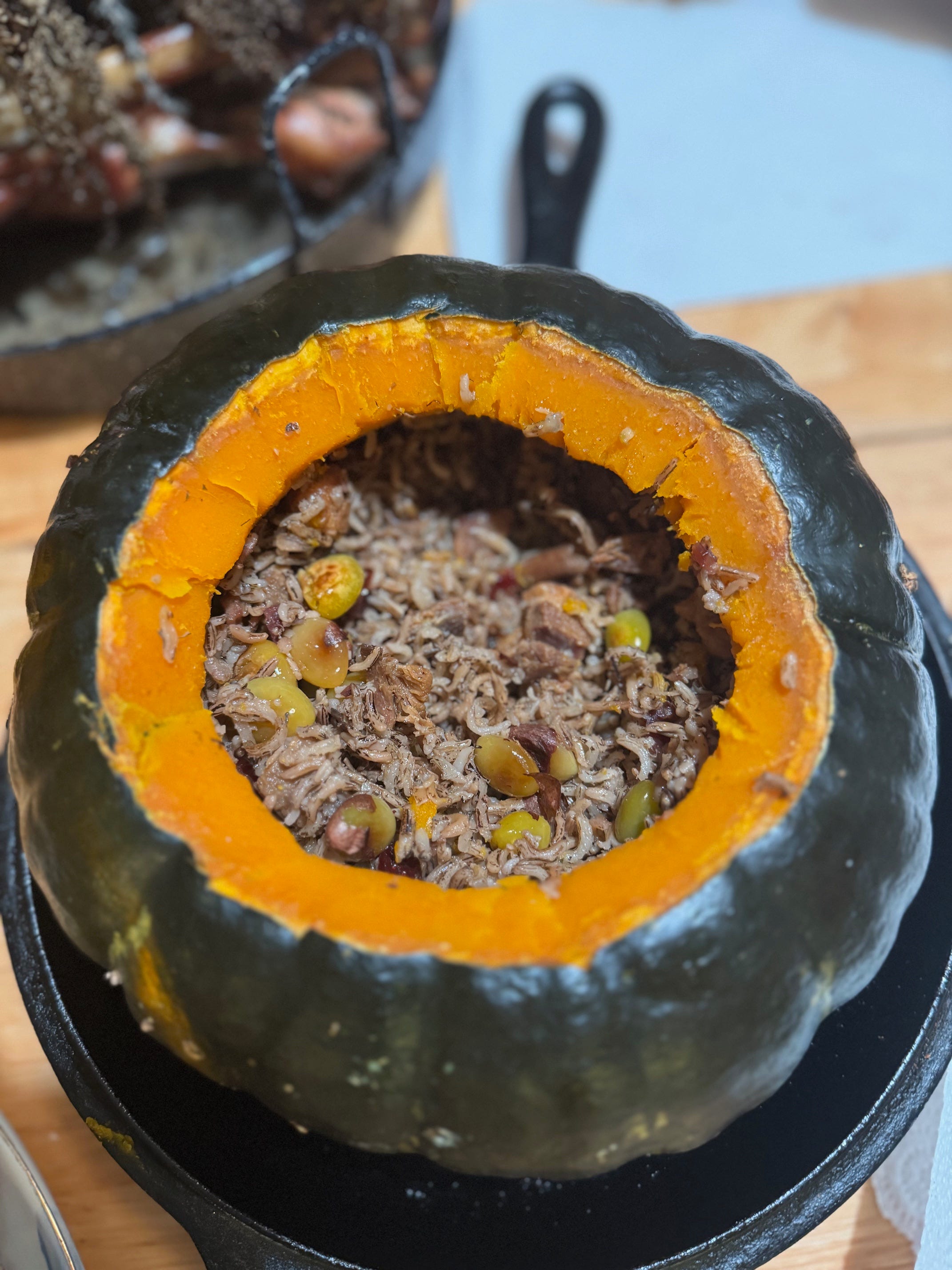
For Thanksgiving this year I made a rice stuffing using Ojibwe manoomin rice, Pjiekakjoo wild mushrooms, cranberries, ginkgo, and more crisped duck. I precooked the rice, mixed in everything else, and then roasted it all inside a kabocha squash. It was a crowd favorite.
Soup Variations:


Left: duck and daikon is the classic recipe. In the dead of winter, I added pork ribs and winter bamboo and boiled hard to create a creamy, fatty emulsified broth. Middle: in spring, I used cured duck to create a broth base and added fresh foraged spring bamboo, more pork ribs, and tofu knots - a rich take on yanduxian. Right: a recent, more experimental take with chayote and sour pickled bamboo in a clearer broth (I simmered gently, letting all the flat float to the top, and then skimmed it off). Extremely satisfying. Next time, I want to add play around with tamarind to take this toward a sinigang direction.
Stir Fry Variations:


Left: shredded cured duck, pickled chilies (duojiao), and spring bamboo. Right: stir fried with potatoes, celery, and mint. Barely scratching the surface of possibilities here, since you can substituted cured duck for any stir fry that uses larou. Note: for stir-fries, you definitely need to steam, soak, or boil the legs first to soften them and remove excess salt.
Dim Sum Variations:


Left: in turnip cakes, standing in for lap cheong. Non-canon but man, duck and daikon just go great together so why not? Center and right, diced small and added to Jiangnan-style shaomai, which are little purses of sticky rice subtly seasoned with animal fat and soy sauce.
And lastly: Beer Braised Duck With Chestnuts
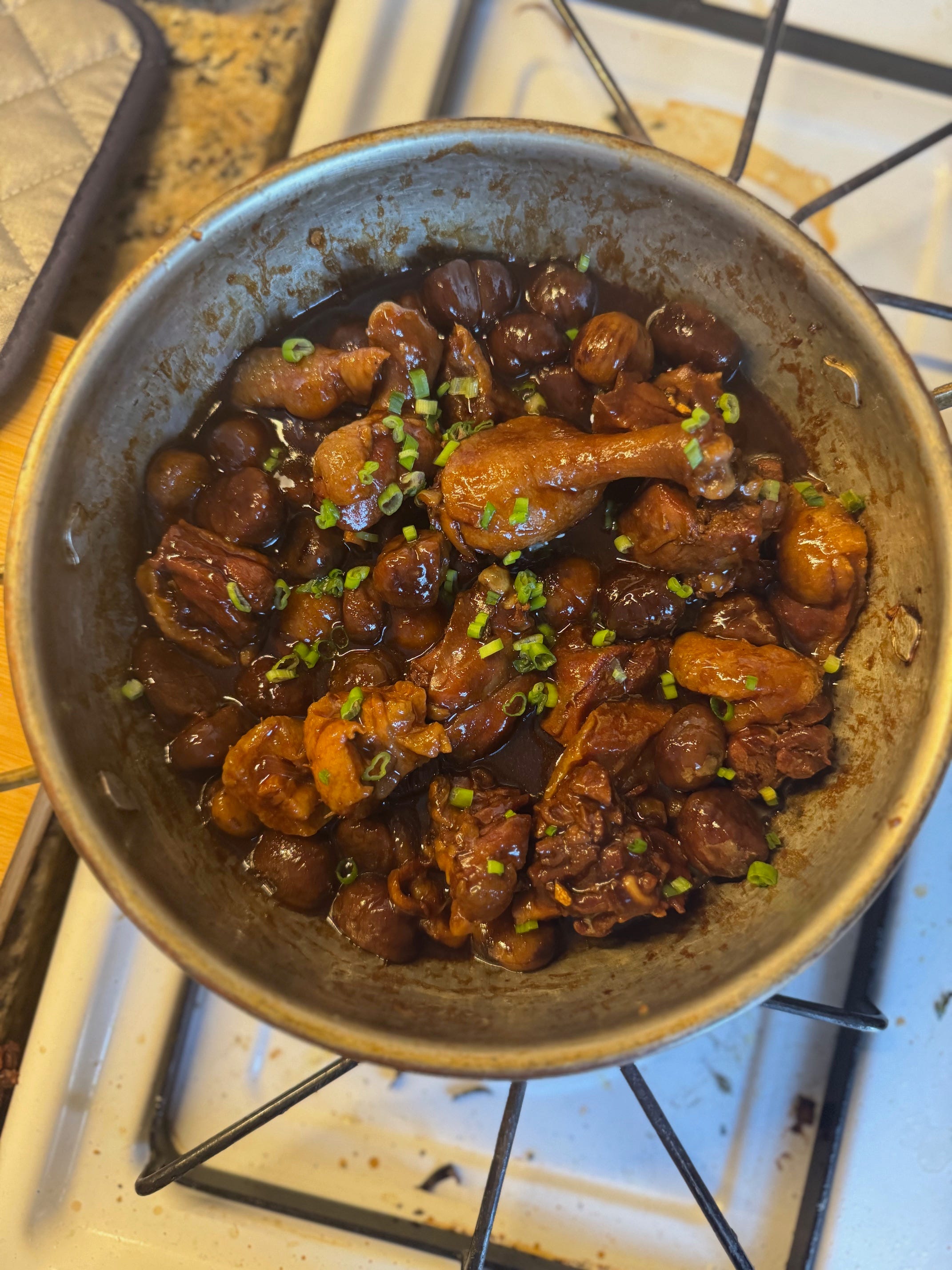
A new household favorite here. Use 2-3 legs for this dish because you want the braise to be worthwhile. Boil the duck for a few minutes to soften it, then hack it into chunks with a meat cleaver. Stir fry strips of ginger and scallion whites together, then add a tablespoon or so of rock sugar. When the sugar has melted, add duck pieces and toss them to coat with sugar syrup and to brown them a bit. Add peeled chestnuts, then healthy glugs of light soy and dark soy and oyster sauce, then enough beer to nearly cover. simmer with the lid partially covered until duck is fully cooked and sauce is reduced down. Adjust seasoning as needed. Add a tablespoon of cornstarch slurry to thicken the sauce. Garnish with scallion greens.
Happy riffing.
Yes, they’ll sell you as little as 4 duck legs at a time. But do you really want to pay shipping for that? Economies of scale, baby.
I think, also, there is something about recipes getting lost in the imperial core. In the Communist era, language, religion, music, and agricultural traditions from Before have survived better in the far-flung regions. Sometimes, I look to Taiwanese food writing to piece together what my people were doing, because a lot of Taiwanese cuisine derives from Jiangnan.
Ditto with the ones you get at the supermarket
Rancidity is not toxic, just gross
Is it reasonable to do this as it starts warming up from the depths of winter, too?